
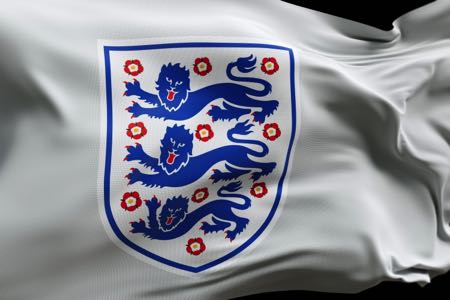
It isn’t exactly outrageous to suggest that there are more than a few football fans out there that don’t care about the England national team. On the whole, they tend to be supporters of teams that have enjoyed huge success, such as Liverpool and Manchester United.
There are many, though, that love the Three Lions and adore international football in general. For them, the idea of being able to represent the nation on the football pitch is the absolute pinnacle of footballing accomplishment, with the badge on the shirt being key. The question is, where did that badge come from?
Representing the Football Association
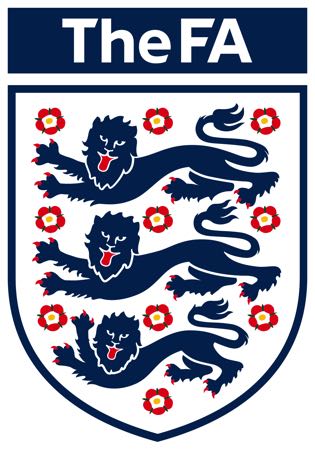 It is fair to say that the Football Association hasn’t exactly covered itself in glory over the years. Having seen the first women’s football match take place in 1881 and witnessed the women’s game to grow and become almost as big as the men’s, for example, the FA made the decision to ban women from using any of its facilities on the fifth of December 1921. It took nearly 50 years for that ban to be rescinded, by which time the men’s game had grown exponentially and the women’s would take decades to recover. As a result, the idea of ‘representing the FA’ doesn’t sit well with many.
Even so, the England national side does exactly that every single time it takes to the pitch. That is on account of the fact that the badge that takes pride of place on the England shirt is the badge of the Football Association. The FA, of course, was formed in 1863, when it seemed entirely sensible for the organisation to have a badge that themed around the Royal shield. That included three lions wearing crowns, which changed in 1949 by removing the crowns in order to differentiate the England football team from the cricketing one. Although we now associate the badge with the team, it remains the FA’s logo that is worn.
The History of the Three Lions
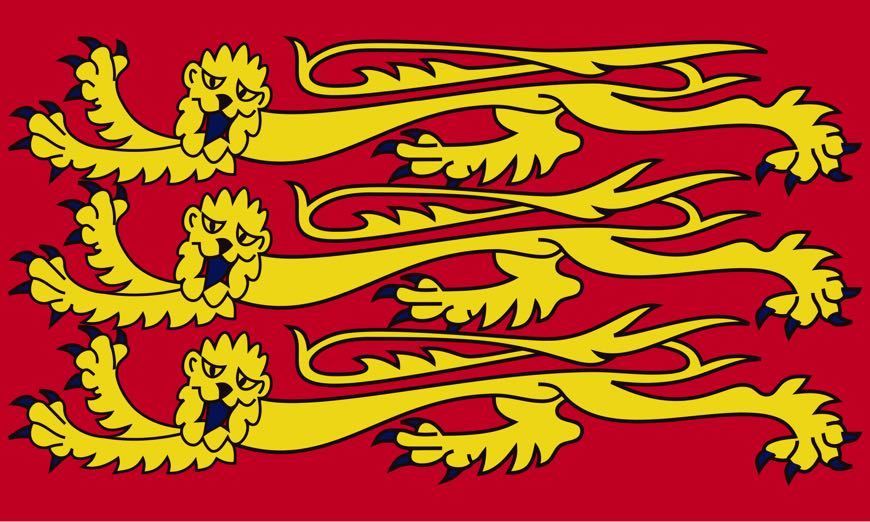

Whilst the badge that England players wear on their top features three lions because of the Football Association’s decision to base its logo on the Royal shield, we need to head much further back in history in order to understand why the Royal Family is associated with three lions. It dates back to the turn of the century in 1200 when the Plantagenets decided to adopt a coat of arms as arms of dominance. That then set the groundwork for every monarch that followed, seeing three golden lions with blue claws and tongues sit atop a red background, lying as if looking out.
The pose of the animals was such that they were initially referred to as ‘leopards’, but they became lions in the years that followed. That is largely because of the fact that Saxons and the Danes used a lion in royal emblems, so there was something of a merging of both together. King Richard I’s Great Seal was the first that put three lions onto a shield, having previously seen two used before a third was added in 1198. This was owing to the fact that King Richard I was the King of England, the Duke of Normandy and the Duke of Aquitaine, so the lions represented each role.
How the Badge Has Changed
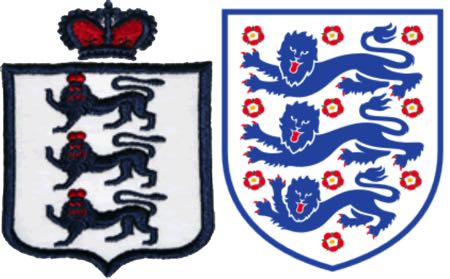
The first time that an England team wore a badge came in 1879, taking to the pitch wearing a much more squat version of the badge that we know today. It had three lions on it, sitting upon a black crest and with crowns upon their heads, with a red crown also appearing on top of the crest itself. That lasted until 1949, which was the point at which the aforementioned decision to remove the crowns from the lions was made. At the same time, the crest was stretched out slightly, appearing less squat than it had done previously. The lions were black, whilst red roses were also placed on the now white crest.
Those roses were put in place on each of the lions, with a fourth added underneath. It was the badge that was used until the 1990s, with a new one being brought in in 1993 when the colour of the lions changed to a light blue. The badge was otherwise pretty much the same, the next change not coming until 2000. At that point, the lions became a dark blue, whilst a dark blue banner was put in place above a slightly shrunken crest, upon which was the world ‘ENGLAND’ written in white. Three years after that, the lions and the banner all became more of a royal blue in hue.
In 2009, the banner was removed, whilst the blue was made slightly lighter. Three years after that and the FA made a decision that was so short-lived as to be considered a major error, making the lions and the crest red. It only remained in place for a year, at which point the previous badge was brought back. That is the badge that has remained in use ever since, seeing the players run out onto the pitch with the logo of the Football Association on their chest, spurred on by supporters who will undoubtedly sing about ‘three lions on a shirt’ during the course of any match.
Do All Teams Wear the Same Badge?

Interestingly, the men and women wear slightly different shirts to one another. The men’s home shirt in 2024 was white with dark blue trim, which also extended to the colour of the three lions on the badge. The away shirt, meanwhile, was essentially like a dark grey with gold and blue accents on the side. The badge itself stripped away the crest, instead opting for three lions in gold with no border around them. That was very different to the Lionesses away shirt in 2025, which was black with gold and red accents on the side and a blue crest for the badge, with black lions.
The Lionesses home shirt was significantly different from the men’s version. It was largely white, with blue cuffs on the bottom of the arm and a blue collar. The top of the shirt was also blue, with a band of red underneath it. The badge had a blue outside with the three lions also being blue, sat on a white background. The Lionesses’ shirts were also allowed to wear a badge in recognition of the fact that they won the European Championship for the second time in the summer of 2025. The different age groups wear the same strip as the senior teams for their gender.
All of which is to say that the badge can be changed and adopted depending on the kit that is put out by the manufacturer responsible for producing it. In 2024 and 2025 that responsibility fell to Nike, with the badge being altered in order to fit into the shirt as well as possible.